





Chronic Venous Disease & Chronic Venous Insufficiency
The most common cause of chronic venous disease is reflux. Reflux is abnormal blood flow direction resulting from venous valve dysfunction. In the lower extremities’ thigh and calf, abnormal flow is from proximal to distal in deep or superficial veins, or deep to superficial in perforating veins. Reflux is most often primary (unknown aetiology and not present at birth), is less often secondary (known cause like trauma and thrombosis), and rarely congenital. Patient with reflux disease can easily overlook or forget symptoms of venous disorders due to their gradual onset or intermittent nature. Most of these patients do not have any visible varicose veins. Symptoms can worsen over time if left untreated.

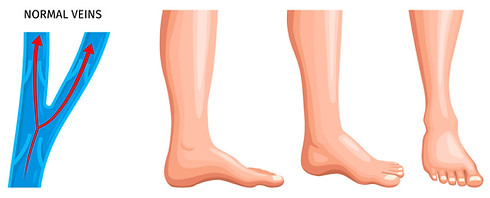
The Venous System:
Superficial veins, veins located close to the surface of the skin. Deep veins-larger veins located deep in the leg.
Perforator veins-veins that connect the superficial veins to the deep veins.
The Varicose Veins:
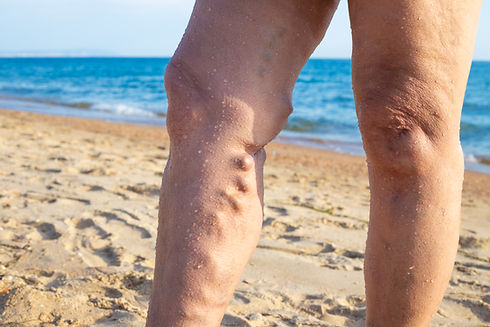
Veins have valves which allow blood to flow against gravity towards the heart. When these valves weaken and don’t function properly, they cause reflux and pooling of the blood into the leg veins because of gravity (especially on standing or sitting). These enlarged, swollen veins are known as varicose veins.


Prevention



Pain Aching or Cramping
How to distinguish between arterial and venous pain?
Symptoms derived from varicose veins can usually be distinguish from arterial symptoms. Pain associated with arterial disease often disappears at rest and is exacerbated with walking.
Pain associated with varicose veins is dull vague and localized on the inner side of the legs. It is usually relieved with walking.
In addition to the dull aching, varicose veins associated with high venous pressure may produce cramping or painful spasms of the legs and an increase in leg fatigue and Restless legs especially at night.
You can do a diagnostic test to determine if the pain is of venous origin. If your symptoms are alleviated with gradient compression stockings or elevating your legs you need to see a Vein Specialist

Throbbing
What is Superficial Venous Thrombosis(SVT) or Thrombophlebitis ?
SVT is an attack of blood clots in veins that lie under the skin within the fat but not in the deep veins. It is a relatively common medical problem. Although commonly thought as a benign process SVT is associated with several underlying pathologic processes, including malignancy and deep vein thrombosis.
Additionally SVT can lead to serious clinical consequences when it evolved into deep vein thrombosis. These patient can develop pulmonary embolism disease.(blood clots moving to the lungs). The overall incidence of lower extremity thrombophlebitis has been reported to be 3-11% in the general population. It affects men and women at the same rate with most with most occurring in the mid-fifties. Varicose veins are present in over 60% of patients with SVT.
How do I know if I have superficial venous thrombosis / thrombophlebitis?
You will have a tender area over a vein and may see local redness with some swelling the lower leg. When you go to your vein specialist a duplex doppler to show if blood is moving normally in the veins. Venous clotting (thrombosis) is present when the veins are bigger than normal (filled with blood clot) and little or no blood movement is taking place.
The Varicose Veins:
If the SVT is only I a lower leg varicose vein, and not close to the big part of the biggest superficial vein(the saphenous vein), treatment is usually warm compression , compressive stockings and anti-inflammatory drugs to decrease local discomfort.If SVT goes into the biggest superficial veins especially close to the groin and upper thigh or if there is also deep vein thrombosis, then full dose blood thinning agents are needed to protect you from blood clots going to the lungs.(Pulmonary embolism)


Ulcers
(open wounds)
How to distinguish between arterial and venous pain?
Symptoms derived from varicose veins can usually be distinguish from arterial symptoms. Pain associated with arterial disease often disappears at rest and is exacerbated with walking.
Pain associated with varicose veins is dull vague and localized on the inner side of the legs. It is usually relieved with walking.
In addition to the dull aching, varicose veins associated with high venous pressure may produce cramping or painful spasms of the legs and an increase in leg fatigue and Restless legs especially at night.
You can do a diagnostic test to determine if the pain is of venous origin. If your symptoms are alleviated with gradient compression stockings or elevating your legs you need to see a Vein Specialist

Burning or Itching
of the Skin
How to distinguish between arterial and venous pain?
Symptoms derived from varicose veins can usually be distinguish from arterial symptoms. Pain associated with arterial disease often disappears at rest and is exacerbated with walking.
Pain associated with varicose veins is dull vague and localized on the inner side of the legs. It is usually relieved with walking.
In addition to the dull aching, varicose veins associated with high venous pressure may produce cramping or painful spasms of the legs and an increase in leg fatigue and Restless legs especially at night.
You can do a diagnostic test to determine if the pain is of venous origin. If your symptoms are alleviated with gradient compression stockings or elevating your legs you need to see a Vein Specialist



Leg or Ankle
Swelling (Oedema)
How to distinguish between arterial and venous pain?
Symptoms derived from varicose veins can usually be distinguish from arterial symptoms. Pain associated with arterial disease often disappears at rest and is exacerbated with walking.
Pain associated with varicose veins is dull vague and localized on the inner side of the legs. It is usually relieved with walking.
In addition to the dull aching, varicose veins associated with high venous pressure may produce cramping or painful spasms of the legs and an increase in leg fatigue and Restless legs especially at night.
You can do a diagnostic test to determine if the pain is of venous origin. If your symptoms are alleviated with gradient compression stockings or elevating your legs you need to see a Vein Specialist

Skin
Changes
How to distinguish between arterial and venous pain?
Symptoms derived from varicose veins can usually be distinguish from arterial symptoms. Pain associated with arterial disease often disappears at rest and is exacerbated with walking.
Pain associated with varicose veins is dull vague and localized on the inner side of the legs. It is usually relieved with walking.
In addition to the dull aching, varicose veins associated with high venous pressure may produce cramping or painful spasms of the legs and an increase in leg fatigue and Restless legs especially at night.
You can do a diagnostic test to determine if the pain is of venous origin. If your symptoms are alleviated with gradient compression stockings or elevating your legs you need to see a Vein Specialist


Varicose Bleeding
Bleeding , thrombophlebitis and deep vein thrombosis(blood clot) ate the 3 most severe acute complications of varicose veins.
Bleeding from varicose veins(which can be life-threatening) must be referred to a vein specialist and is not a rare event. Never allowed any physician to suture the bleeder because it will form a venous ulcer.
If it bleeds it is not necessary to go the emergency department but immediately apply pressure on the bleeder and then elevate your leg 20 cm higher than your heart. (Stop bleeding within seconds to minutes).
The bleeding area typically consist of a mat of blue blebs, each 1-2 mm in diameter on the inner side of the ankle. Your Vein Specialist will do a duplex doppler and usually it shows an underlying incompetent vein(pressure in vein is very high). The bleeding is usually profuse and if unattended or if not treated it can be fatal.(Cause of death). The bleeding is usually spontaneous but maybe also occur when the skin overlying a varicose vein become traumatised.
If the pressure in the is very high the bleeding may appear to be arterial in origin. Treatment is sclerotherapy and not sutures because sutures cause venous ulceration.

Varicose Veins
During Pregnancy
Varicose veins can develop during or even exacerbated by pregnancy. No intervention treatments are indicated during pregnancy except in exceptional circumstances. Compression stockings must be offered for symptomatic relief.


Toenail Alterations
Toenail onychomycosis (fungal nail infection) and chronic venous disease are significant health problems and the incidence of both diseases increase with advancing age and can reduce patient’s quality of life.
The fungal infection is more common in toenails than in fingernails. The prevalence is increasing due to aging, life-style changes and with diabetes mellitus.
Studies have showed that fungal infection is more common in patients with chronic venous disease.
The reason for skin and toenail abnormalities in chronic venous disease is complex. In chronic venous disease there is venous hypertension (high pressure) causes a decrease in blood flow through the small blood vessels and decrease number and leading to abnormal changes in the walls of the small blood vessels. Decreased blood flow and nutrient deficiency are the most likely reason for increased cell death and decreased tissue regeneration. The nail growth is slower, the skin becomes dry and nail becomes brittle and immune response decreases.
If there are toe nail abnormalities, nail specimen must be obtained and send for fungal examination.
Onychomycosis was more frequent in patients with more advanced stage of chronic venous disease.